How to Fortify Your Medical Device Company Against Iran-Linked Wiper Attacks
What You Need
- An incident response team (IT security, legal, PR, executive leadership)
- Offline, immutable backups stored securely and tested regularly
- Endpoint detection and response (EDR) tools with anti-wiper capabilities
- Network segmentation to isolate critical medical systems
- A crisis communication plan (internal and external channels)
- Threat intelligence feeds covering Iran-linked groups like Handala/Void Manticore
- Employee training materials on phishing, suspicious activity, and offline communication
Step 1: Conduct a Threat–Specific Risk Assessment
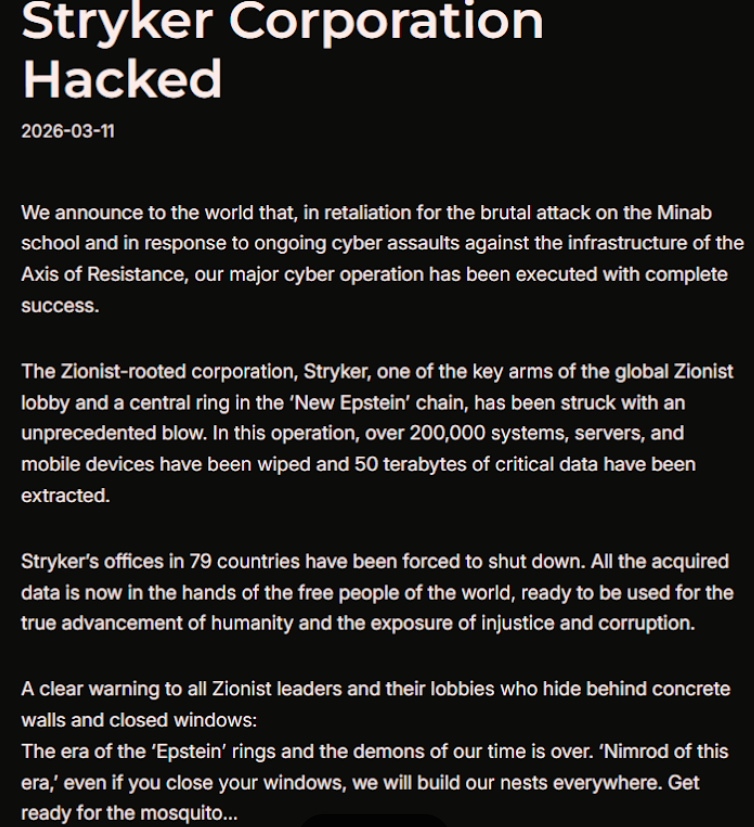
Start by mapping your organization’s exposure to advanced persistent threats (APTs) and hacktivist groups like Handala (also known as Void Manticore), which is linked to Iran’s Ministry of Intelligence and Security. The group recently claimed a wiper attack on Stryker, a Michigan–based medtech firm, erasing data from over 200,000 systems, servers, and mobile devices and forcing the shutdown of offices in 79 countries. Identify which of your assets—patient data, intellectual property, production systems—would be most devastating if wiped. Use the NIST Cybersecurity Framework to guide your evaluation.

Step 2: Build a Defensible Network Architecture
Segmentation is your first defense. Separate your operational technology (OT) (e.g., medical device manufacturing lines) from your information technology (IT) environment. In the Stryker incident, the attacker’s wiper payload spread across 200,000 endpoints, hinting at a flat network. Implement strict firewall rules, zero–trust network access, and micro–segmentation so that a breach in one area cannot spill into critical medical systems. Use VLANs and software–defined perimeter controls.
Step 3: Deploy Anti–Wiper and EDR Solutions
Wiper malware overwrites data to cause permanent damage. Equip your endpoints with next–gen antivirus and EDR tools that can detect unusual file–write patterns (e.g., mass overwrites with junk data). Palo Alto Networks has profiled Handala; use their indicators of compromise (IoCs) to tune detection rules. Enable application whitelisting to block unauthorized executables. Also, configure your email gateways to strip malicious attachments—many wiper attacks start with phishing.
Step 4: Implement Immutable, Offline Backups
Your backup strategy must survive a wiper attack. Store backups on air–gapped, immutable media (e.g., write–once tapes or cloud storage with object lock). The Stryker attack wiped data from both servers and mobile devices, including employees’ personal phones with Outlook. Ensure your backup plan covers corporate laptops, mobile devices (via MDM), and cloud apps. Test restoration from backups quarterly—not just the backup process.
Step 5: Create and Practice an Incident Response Plan
When the wiper hits, every second counts. Write a plan that includes:
- Containment steps: Immediately isolate affected systems from the network, even if that means pulling plugs.
- Forensics preservation: Capture memory and disk images before reboot.
- Alternate communication channels: During the Stryker attack, employees used WhatsApp because corporate email and phones were wiped. Pre–register a WhatsApp group or a Slack channel on a separate domain.
- Legal and PR notifications: Iran–linked groups often claim attacks on Telegram, as Handala did, and may leak stolen data. Have pre–drafted statements.
Conduct tabletop exercises simulating a wiper attack on your headquarters and satellite offices. Include the scenario where 5,000 workers are sent home, as happened at Stryker’s Cork, Ireland hub.
Step 6: Craft Your Employee Communication Strategy
Employees will be confused and scared. In the Stryker case, the company sent a voicemail message saying “We are currently experiencing a building emergency.” That message can be augmented with:
- Pre–recorded, offline–accessible instructions (e.g., a password–protected web page hosted outside the corporate network).
- A phone tree that uses personal mobile numbers (while being careful about privacy).
- Regular updates via alternative channels (WhatsApp, SMS, local radio).
Warn employees that the attackers may deface login pages with their logo (as Handala did) to spread panic. Remind them not to attempt logins from compromised devices.
Step 7: Conduct Post–Incident Review and Threat Intelligence Sharing
After the crisis, analyze what happened. Did the wiper spread through a phishing email? A remote desktop vulnerability? Share your findings with sector–specific ISACs (e.g., Health–ISAC) and law enforcement. Iran–backed groups like Void Manticore frequently change personas but reuse tools. Reporting your IoCs helps the entire medical technology community.
Tips for Long–Term Resilience
- Stay informed about geopolitical motives: Handala claimed retaliation for a U.S. missile strike on a school in Iran that killed 175 children. Nationalistic or political triggers can escalate quickly. Subscribe to threat intelligence reports that cover hacktivist motivations.
- Harden mobile device management: In the Stryker wiper attack, employees’ personal phones with Outlook were wiped. Enforce MDM policies that allow remote wipe only from a secure console, and encourage employees to keep work data off personal devices.
- Practice “fail–safe” drills: Run a simulated outage where all servers appear wiped. Can your critical medical device manufacturing continue? How do you ship orders without an ERP? Test business continuity for a 2–week offline period.
- Build relationships ahead of time: Have retainer agreements with forensics firms, cyber insurance carriers, and crisis communication consultants. When 200,000 systems are wiped, you don’t want to be Googling “incident response company” in the middle of it.
By following these steps, your medical device company can significantly reduce the blast radius of an Iran–linked wiper attack—and recover faster than Stryker’s 5,000 Cork employees currently waiting for updates via WhatsApp.
Related Articles
- Securing Cloud Credentials in Public Repositories: Lessons from the CISA GitHub Leak
- The Bizarre Case of a DDoS Protector Turned Attacker: Q&A on the Brazilian ISP Botnet Saga
- Apple Bolsters macOS Defenses Against Social Engineering: Terminal Paste Warnings
- The Downfall of 'Tylerb': Inside the Scattered Spider Cybercrime Kingpin's Guilty Plea
- Zara Data Breach: Personal Details of Nearly 200,000 Customers Stolen
- 10 Critical Insights Into the OceanLotus PyPI Attack Dropping ZiChatBot Malware
- Unmasking a Hidden DDoS Botnet: How Attackers Turned a Security Firm Against Its Own Clients
- Microsoft Issues Urgent Alert: Advanced Phishing Attack Targets US Firms with Conduct Report Lure