Mastering GitHub Copilot CLI: Interactive vs Non-Interactive Modes Explained
Introduction
GitHub Copilot CLI is a powerful tool that brings AI-powered code suggestions directly to your terminal. Whether you're a seasoned developer or just starting out, understanding its two primary modes—Interactive and Non-Interactive—can significantly boost your productivity. This guide breaks down each mode, how to use them, and when to choose one over the other.
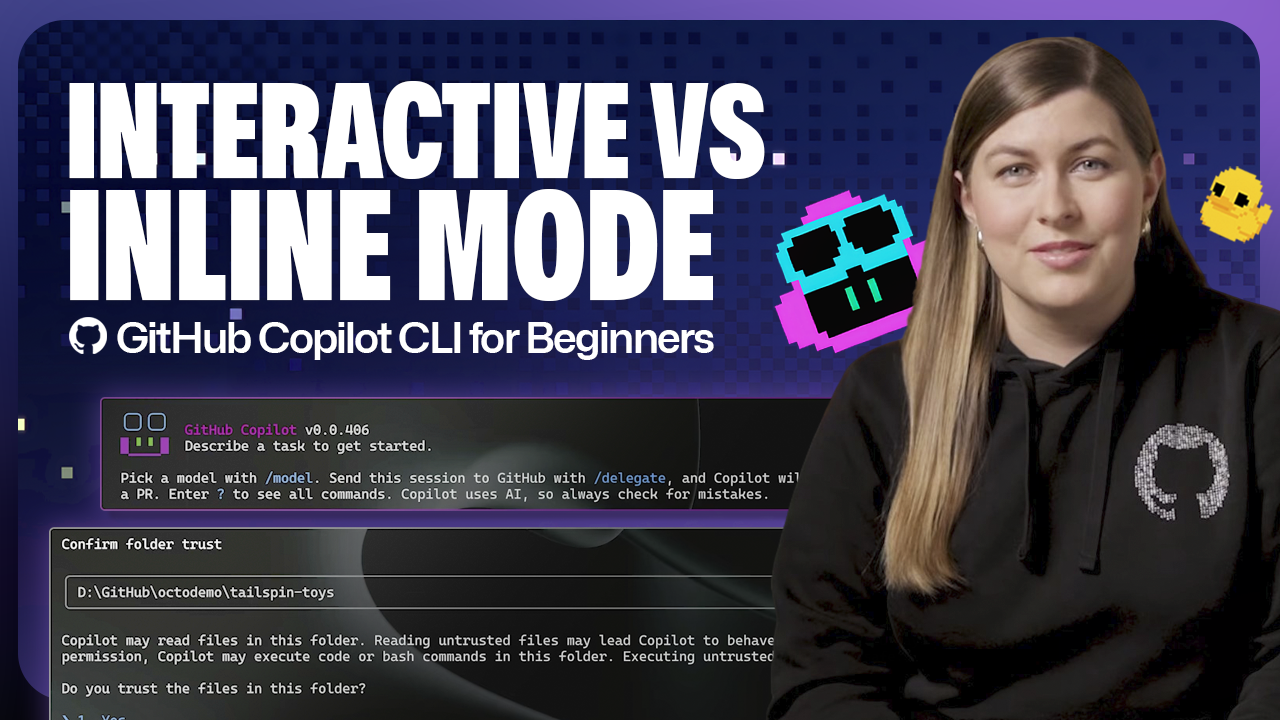
Understanding the Two Modes
Interactive Mode – A Conversational Assistant
By default, when you launch GitHub Copilot CLI by typing copilot in your terminal, you enter Interactive mode. This mode creates a chat-like environment where you can have a back-and-forth conversation with the AI. It's ideal for tasks that require exploration, iteration, or collaboration.
Here's how to get started:
- Type
copilotand press Enter. - If prompted, confirm that you trust the current folder—Copilot needs permission to read and modify files.
- Ask a question, such as “How do I run this project locally?”
- Review the instructions provided. If you want Copilot to execute the commands, ask: “Can you run it for me?”
- Copilot will analyze your project and run the server, all within the same session.
With Interactive mode, you can review outputs, ask follow-up questions, and refine your requests without restarting. It's perfect for digging into complex repositories, debugging step by step, or learning new codebases.
Non-Interactive Mode – Quick Answers on the Go
For those moments when you need a fast, one-off answer without entering a full session, Non-Interactive mode is your best friend. Instead of launching a chat, you pass a single prompt directly on the command line and get an immediate response.
To use it:
- Ensure you're at your regular shell prompt (exit Copilot if you're in Interactive mode).
- Type
copilot -pfollowed by your request, e.g.,"Quickly summarize what this repository does and the key folders." - Copilot processes your prompt and returns the answer—no follow-up required.
This mode is designed for speed and simplicity. It's excellent for summarizing project structures, generating code snippets, integrating into automated scripts, or getting a quick answer without leaving your workflow. Once you have the information, you're right back in your terminal.

Choosing the Right Mode for Your Task
Both modes have distinct strengths. Interactive mode shines when you need to explore, iterate, or collaborate with the AI over multiple steps. It's like having a coding partner who can adapt as you learn more about the problem.
Non-Interactive mode, on the other hand, is purpose-built for quick, focused tasks. When you already know exactly what you need—like generating a one-liner or summarizing a file—this mode saves you time by eliminating the overhead of a full session.
Consider these scenarios:
- Use Interactive mode when debugging a tricky issue, understanding a new codebase, or writing a multi-step script.
- Use Non-Interactive mode for quick lookups, generating boilerplate code, or integrating Copilot into a shell pipeline.
Getting Started with Copilot CLI
To begin using GitHub Copilot CLI, ensure you have an active GitHub Copilot subscription and have installed the CLI tool via npm or your package manager. Once installed, open your terminal and try both modes to see which fits your style.
For a deeper dive, check out the official documentation or our video series on mastering Copilot CLI.
Conclusion
GitHub Copilot CLI's Interactive and Non-Interactive modes offer flexibility for every type of task. By understanding their differences—conversational depth versus rapid-fire answers—you can choose the right tool for the job and streamline your development workflow. Experiment with both to unlock the full potential of AI-assisted coding from your command line.
Related Articles
- GitHub Copilot CLI Debuts Dual-Mode Operation: Interactive and Non-Interactive Commands for Developers
- Don Juan Pond: The Antarctic Lake That Defies Freezing with Super-Saline Chemistry
- Wendy's Shuts 174 U.S. Stores as Turnaround Plan Takes Shape; Shares Jump 4%
- Stardew Valley Creator Weighs Adultery and Divorce Mechanics: 'Morally Against It'
- Experts Warn GUARD Act Could Block Teens from Basic Internet Tools, Not Just Dangerous AI
- Essential DevOps Pitfalls for Growing Startups: A Practical Guide
- Axios NPM Package Breached: North Korea-Linked Hackers Deploy WAVESHAPER Backdoor in Widespread Supply Chain Attack
- The Block Protocol: Unlocking Interchangeable Web Blocks