Nature's Calculations: The Mathematical Precision of Plant Light Adaptation
The Challenge of Variable Sunlight
Living on light is a high-stakes endeavor. While sunlight provides the energy plants need to thrive, it also brings hazards: ultraviolet rays can damage DNA and degrade essential molecules. Moreover, light intensity fluctuates dramatically—from gentle morning rays to harsh noon brilliance, from dappled shade to sudden full exposure. These swings in solar energy present a constant challenge. Think of a cloud passing overhead: in seconds, a leaf may shift from bright light to dim shade, forcing its cells to adjust rapidly. Plants cannot predict these changes, yet they must manage them continuously to survive and grow.
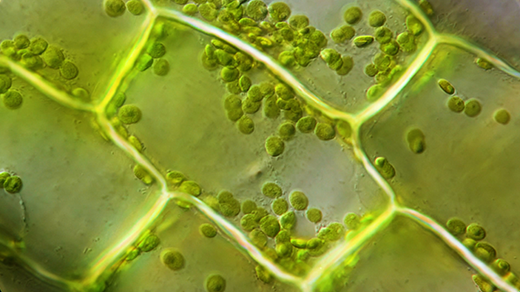
This necessity has driven the evolution of sophisticated internal mechanisms. Beneath the quiet exterior of a leaf lies a bustling world of cellular activity, where mathematical principles govern responses to light. From chloroplast movements to biochemical feedback loops, plant cells execute precise calculations to optimize energy capture while minimizing damage.
Chloroplast Movement: A Calculated Response
One of the most striking examples of mathematical precision in plant cells is the movement of chloroplasts. These organelles, responsible for photosynthesis, shift position within leaf cells depending on light conditions. In low light, they spread out to maximize absorption; in high light, they cluster together or move to the edges to avoid overexposure. This behavior, known as chloroplast photorelocation, follows predictable patterns that can be modeled mathematically.
The mechanism relies on a delicate balance of forces: actin filaments act as tracks, and motor proteins called myosins move the chloroplasts along them. Light sensors, such as phototropins, detect changes in intensity and trigger signaling cascades that adjust movement. Researchers have found that the speed and direction of chloroplast movement adhere to diffusion-like equations akin to those used in physics. When light is uniform, chloroplasts distribute randomly; when a gradient appears, they migrate toward optimal zones—a process that resembles the mathematical optimization of heat distribution.
Photosynthetic Optimization Algorithms
Inside chloroplasts themselves, the light-dependent reactions of photosynthesis function like a finely tuned algorithm. The photosystems—Photosystem II and Photosystem I—capture photons and convert them into chemical energy. But too much light can overwhelm the system, leading to oxidative stress. To prevent this, plants employ several feedback loops that dynamically adjust efficiency.
The xanthophyll cycle is a prime example. Under high light, the pigment violaxanthin is converted to zeaxanthin, which dissipates excess energy as heat. This conversion is reversible and mathematically described by a kinetic model with rate constants that depend on the intensity of light. Similarly, the pH gradient across the thylakoid membrane modulates the activity of the enzyme that drives carbon fixation. These systems form a nonlinear control system that maintains stability despite wide fluctuations in input.
Recent studies have shown that these adjustments can be predicted using stochastic models that account for random variations in light. By applying principles from probability theory, scientists can simulate how a plant will respond to a changing environment. This mathematical approach has revealed that plants are not simply passive receivers of light—they actively compute the most efficient use of available energy.
The Role of Cryptochromes and Phototropins
Plants perceive light through a suite of photoreceptors, each tuned to specific wavelengths. Among them, cryptochromes detect blue and UV-A light, while phototropins mediate movement responses. These proteins act as molecular switches that alter their structure upon absorbing light, initiating signaling cascades that influence gene expression and cellular behavior.
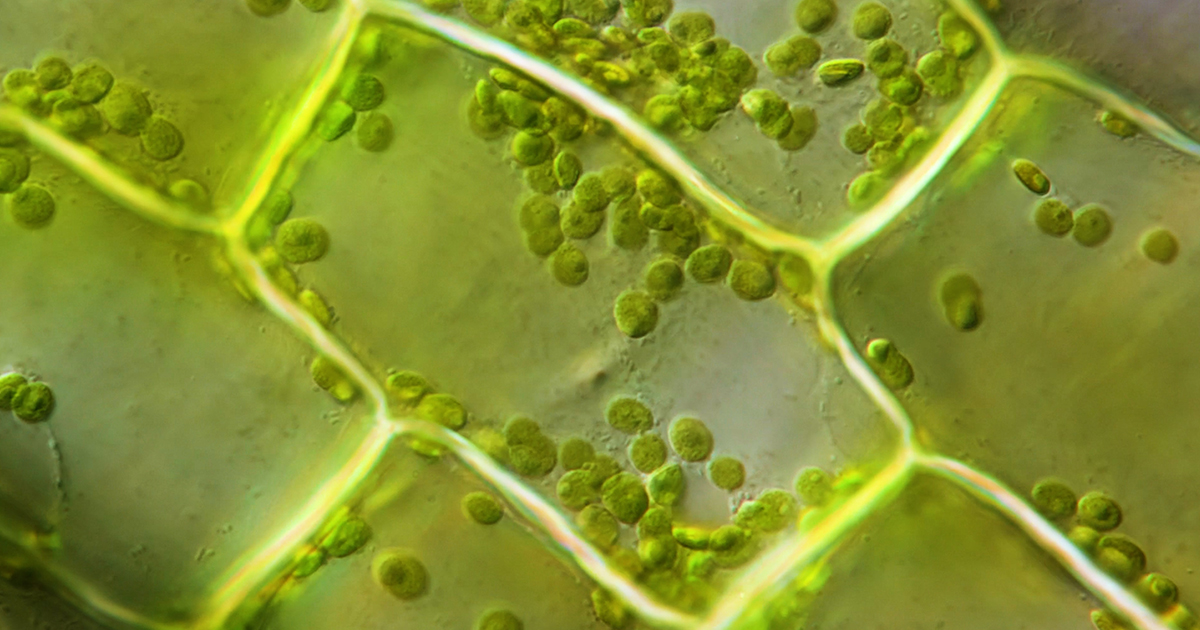
Cryptochromes are particularly fascinating because they also participate in the circadian clock—the internal timekeeper that synchronizes biological processes with the day-night cycle. Mathematical models of the circadian system employ differential equations to describe the oscillating levels of proteins like LHY and TOC1. Light input from cryptochromes resets these oscillations, allowing plants to anticipate dawn and dusk. This temporal computation is essential for optimizing photosynthesis and growth.
Phototropins, on the other hand, control the direction of growth (phototropism) and chloroplast movement. Their activation follows a logarithmic relationship with light intensity, enabling plants to respond sensitively across a wide dynamic range. This is analogous to how human eyes adjust to brightness—a phenomenon known as the Weber-Fechner law, which also applies to plant systems.
Implications for Agriculture and Solar Energy
Understanding the mathematical dance inside plant cells has practical applications. In agriculture, knowledge of how plants optimize light use can inform breeding programs for crops with higher efficiency. For instance, by manipulating the chloroplast movement system, researchers might develop varieties that cope better with sudden light shifts—a growing concern due to climate change. Similarly, insights from photosynthetic optimization could inspire artificial photosynthesis technologies, such as solar panels that mimic the xanthophyll cycle to prevent overheating.
Additionally, the mathematical models used to describe plant light adaptation are now being applied to robotic systems that need to manage variable energy sources. The principles of diffusion, feedback, and stochastic control derived from plant cells offer elegant solutions for engineers.
In summary, the hidden mathematical dance inside plant cells is not merely a curiosity—it is a testament to the sophistication of evolution. From chloroplast choreography to quantum-level energy transfer, plants demonstrate that survival in a variable world requires not just raw power, but precise computation. As we continue to decode these natural algorithms, we unlock new possibilities for sustainable technology and deeper appreciation of the green world around us.
Related Articles
- Urgent Flash Deal Alert: Top Android Games and Apps Slashed Up to 80% Off – Plus Record-Breaking Samsung Tablet & Laptop Discounts
- Star Wars Is My White Whale: Mortal Kombat Writer Reveals the One Franchise He Would 'Die' to Join
- Breaking: Mixtape Secured from Music Licensing Removal as Developer Pays Premium for Rights
- Unlock Smoother Mobile Gaming: How to Use Lossless Scaling Frame Generation on Android
- Linux Kernel Patch Could Revive Gaming Performance on Older PCs
- Rethinking Dull, Dirty, and Dangerous Jobs: A Robotics Perspective
- 5 Surprising Facts About GameStop's Bold $56 Billion Bid for eBay
- 10 Things You Need to Know About Call of the Elder Gods: A Lovecraftian Indiana Jones Adventure